



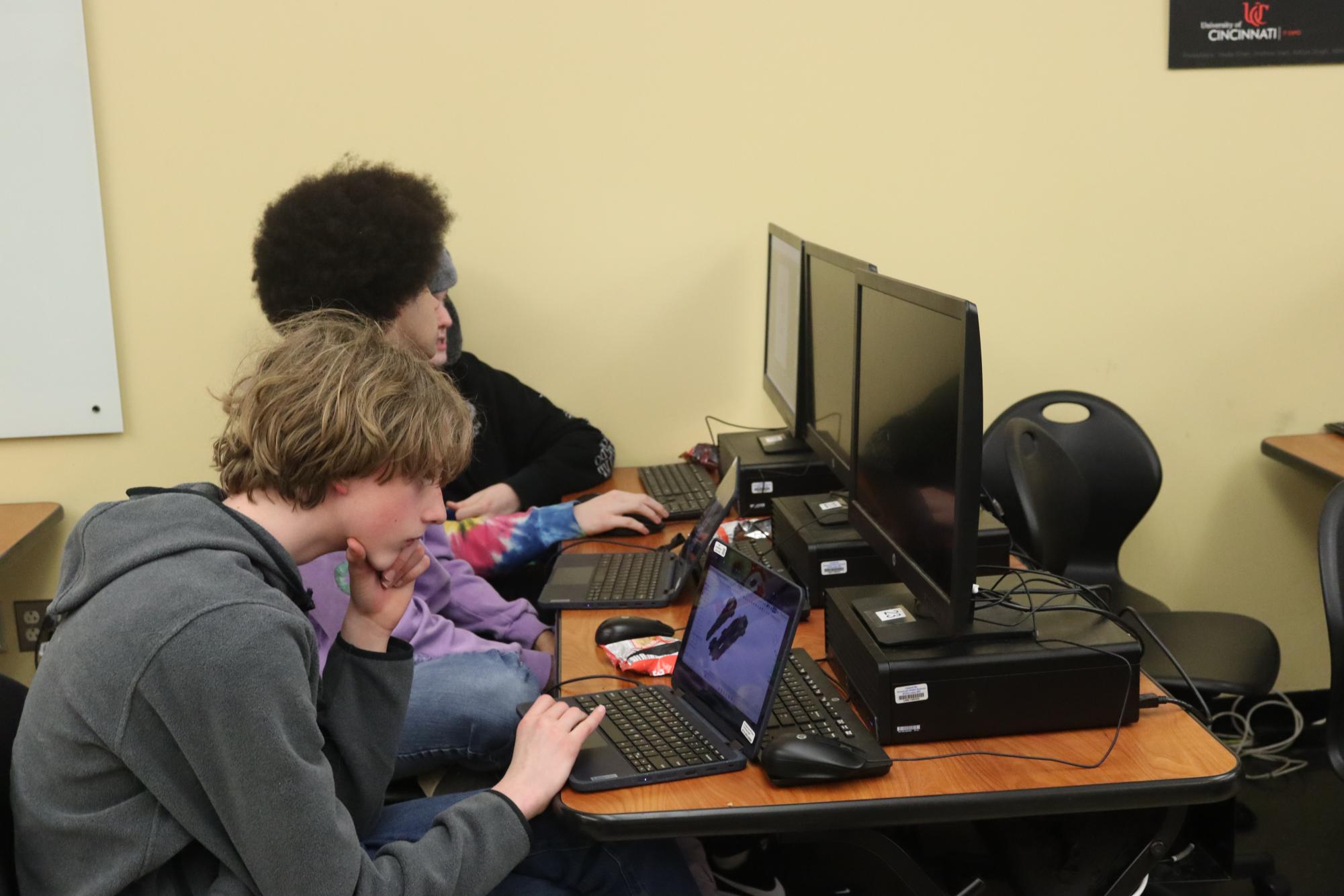
What would you do with $10,000? Spend, invest, save or donate — the opportunities are endless. For many, this is a dream mused upon during a boring math lecture. However, for the programming club, this dream recently became a reality when they won $10,000 in credit from Samsung by developing a groundbreaking virtual microscope website called “Eagle Vision,” aiming to make science more accessible and cost effective.
Every year, the programming club chooses one project to work on over the entire year to submit to state competitions like TechOlympics and IT Expo. This year’s project is a website that allows teachers to display the feed of a microscope in live sessions, similar to Peardeck.
“One day in Dr. Harsh’s [AP Biology class] our lab got screwed up, and all the samples went bad, and she had to just [project] a picture,” Bahand Abdulrahman, ‘26, president of Programming Club, said. “So, I [thought], ‘I wish there was actually live software.’”
After pitching his idea and receiving a resounding affirmative, they all devoted their attention to the project. One day, club advisor Richard Kerkhoff approached Abdulrahman with an intriguing e-mail about the Samsung competition.
“I looked into it, and it seemed to really line up with the project we’re doing, because our project is making microscopes more accessible,” Abdulrahman said. “All four of its categories aligned [with] our project.”
This year, the four categories outlined in the grant are environmental sustainability, social change, accessibility and open innovation. The grant is part of the Samsung Solve for Tomorrow STEM Competition, with over 27,250 applicants.
One hundred semi-finalists, including the WHHS programming club, were chosen, winning $10,000 each in Samsung “credit,” given to the entire school, and the possibility of advancing to the finals and winning up to $100,000 more.
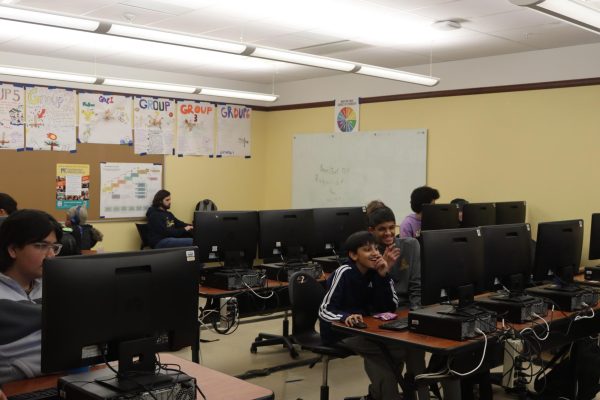
“The main thing is [we] want to provide better computers for [the school],” Sarah Hu, ‘26, vice president of the club, said. “I know that’s really expensive, but $100,000 can do a lot.”
Although winning the grant was a huge acknowledgment of their hard work, the club has faced many challenges while developing the website.
“There were just so many new things I’ve never done before, [like] getting a live feed to work and getting a website to actually stay functional,” Abdulrahman said. “And most recently, the biggest thing was making a domain happen, because school WiFi blocks everything.”
After achieving a solid website with limited issues, they visited Madeira Elementary School for the first official demonstration with actual participants on Thursday, Jan. 22. Madeira only has one microscope in the entire school, creating the perfect environment for such an invention.
“When you only have one [microscope] and 25 students, it would take 40 minutes for us to run through all of the kids to [letthem] see what we were seeing,” Michelle Marketos, 4th grade science teacher, said. “[With Eagle Vision,] every kid was engaged; they were able to interact with the information.”
This idea of expanding access to STEM opportunities is one that the programming club hopes to accomplish on an even greater scale.
“Ultimately, I hope that it’ll be able to help people who don’t have access to a microscope or the specific sample that they want to look at and study,” Daveion Greenwade, ‘26, beginner team teacher for the club, said. “Or if they can’t put their eyes too close to something [but] they still want to look at what’s going on to make new life-changing discoveries.”
Aside from helping people nationally, the club officers also hope that working on the grant will help members of the club to cultivate new skills and feel hope for the future.
“I hope it can inspire other younger members of the club, because we have a lot of beginners this year, and [let] them see [that] this club is making progress,” Hu said. “We’re making an impact.”