


All views shared in the Opinions section of the Chatterbox belong to their respective authors, and may not represent the views of the publication as a whole.
Ever since I was old enough to understand what people were saying, I’ve dreaded hearing that I was wrong.
As a kid, getting in trouble felt like the end of the world for me, even though it never really happened. As I’m getting older, I’m slowly starting to realize that maybe it wasn’t fear, it was pressure I put on myself.
I hold myself to a certain standard of how to act and behave, and I know others do too. So when someone points out something I messed up, my instinctive reaction is to scream, “I swear I’m not clueless!” at them.
I still don’t understand completely why accepting criticism feels so hard. Maybe it’s perfectionism or maybe it’s the fear of looking incapable.
As soon as anyone says, “Can I make a suggestion,” my cheeks turn red and my stomach drops.
No one likes being told they’re wrong, but everyone wants to improve themselves. Finally learning how to accept constructive criticism is the bridge between those two worlds.
So that leads to the big question: How do I learn to accept it? After reading that introduction, maybe the best answer is to ask someone else, but I’ve hopefully already led you this far into my article, so maybe I can help just a little bit.
I’m definitely not perfect at it, but is any teacher really perfect at what they’re teaching? (Go ahead and just say no so I can feel good about myself, please). (See how I just did it again?)
In all truth, I have been working on it, and I’ve come up with three tips to help me.
The first idea is to look for the intention, not just the message. No, people are not attacking you or calling you dumb when giving you suggestions. Take a breath.
Think about times where you have offered someone advice — you don’t mean to make fun of them. At least, I hope not. Their intentions are usually the same.
Someone giving you criticism doesn’t mean they’re the holder of all knowledge; they’re genuinely just trying to help.
It doesn’t matter if the person is older, younger or the same age as you. If you have the opportunity to grow — even just a tiny bit — take it.
The second tip is to separate your self-worth from mistakes. Remind yourself that receiving criticism doesn’t mean you’re not smart or not capable. You are.
Even if you’ve been working on something for years, it does not by any means indicate you have perfected it. Some of the reasons people have gotten so good at a skill is because they learned from others along the way.
Accepting chances to learn means you’re stronger than most; you’re not afraid to let insecurity get the best of you.
As soon as you stop tying your identity to being absolutely flawless, you’ll be able to accept criticism more openly.
The third tip is to respond with gratitude, and don’t get defensive. Assisting someone and them saying that it actually helped feels amazing.
Trust me, I get defensive pretty easily. I really don’t like people thinking I don’t know what I’m doing, even though sometimes I have no idea what I’m doing.
Learning how to accept constructive criticism isn’t easy; people of all ages still need to work on it. It’s hard to become completely immune to that uncomfortable feeling, but there are ways to handle it better.
Improvement doesn’t come from being perfect; it comes from being open. And that openness, whether you’re fifteen or fifty, helps turn mistakes into helpful learning moments.
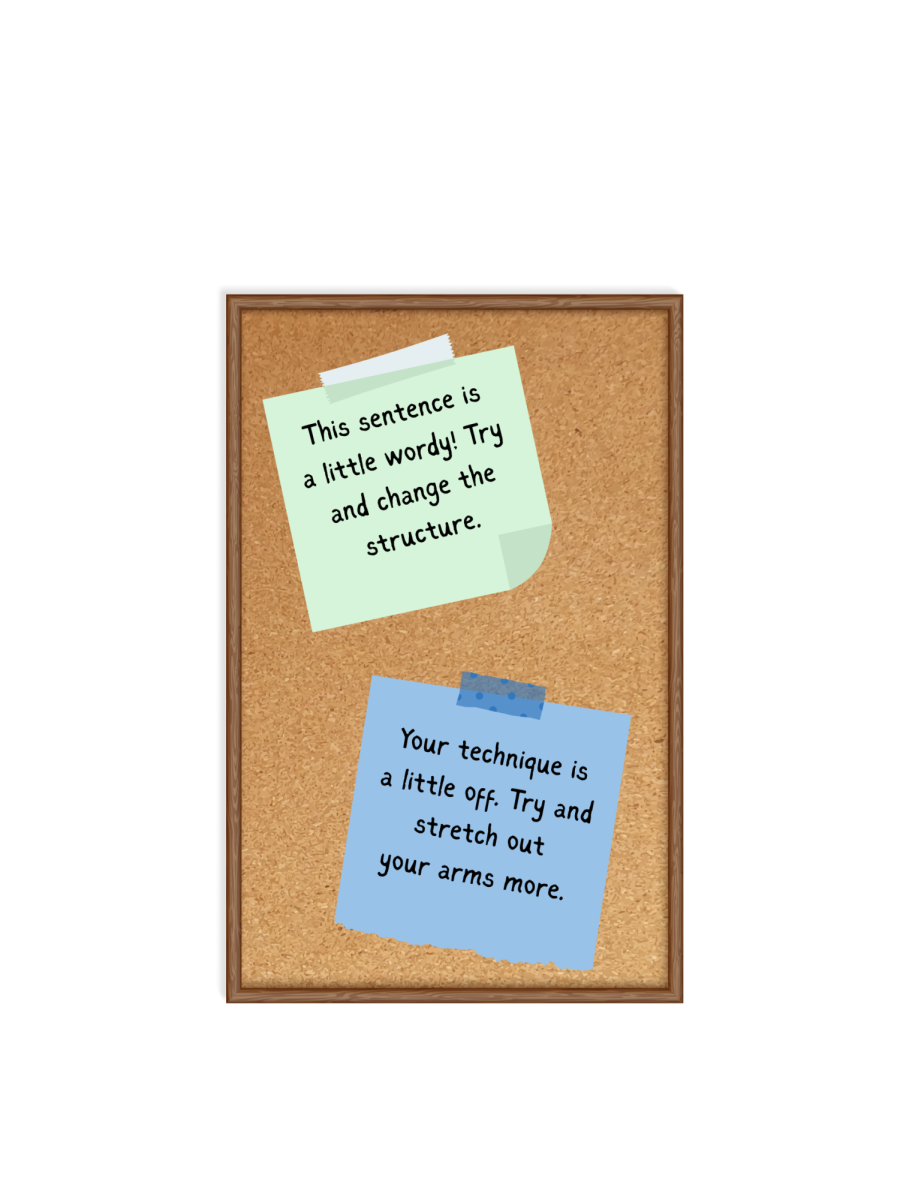
So next time someone offers up a suggestion, just remember those three tips. You never know, maybe your sports performance, writing or whatever else you might be working on could turn out a little better because of it.