
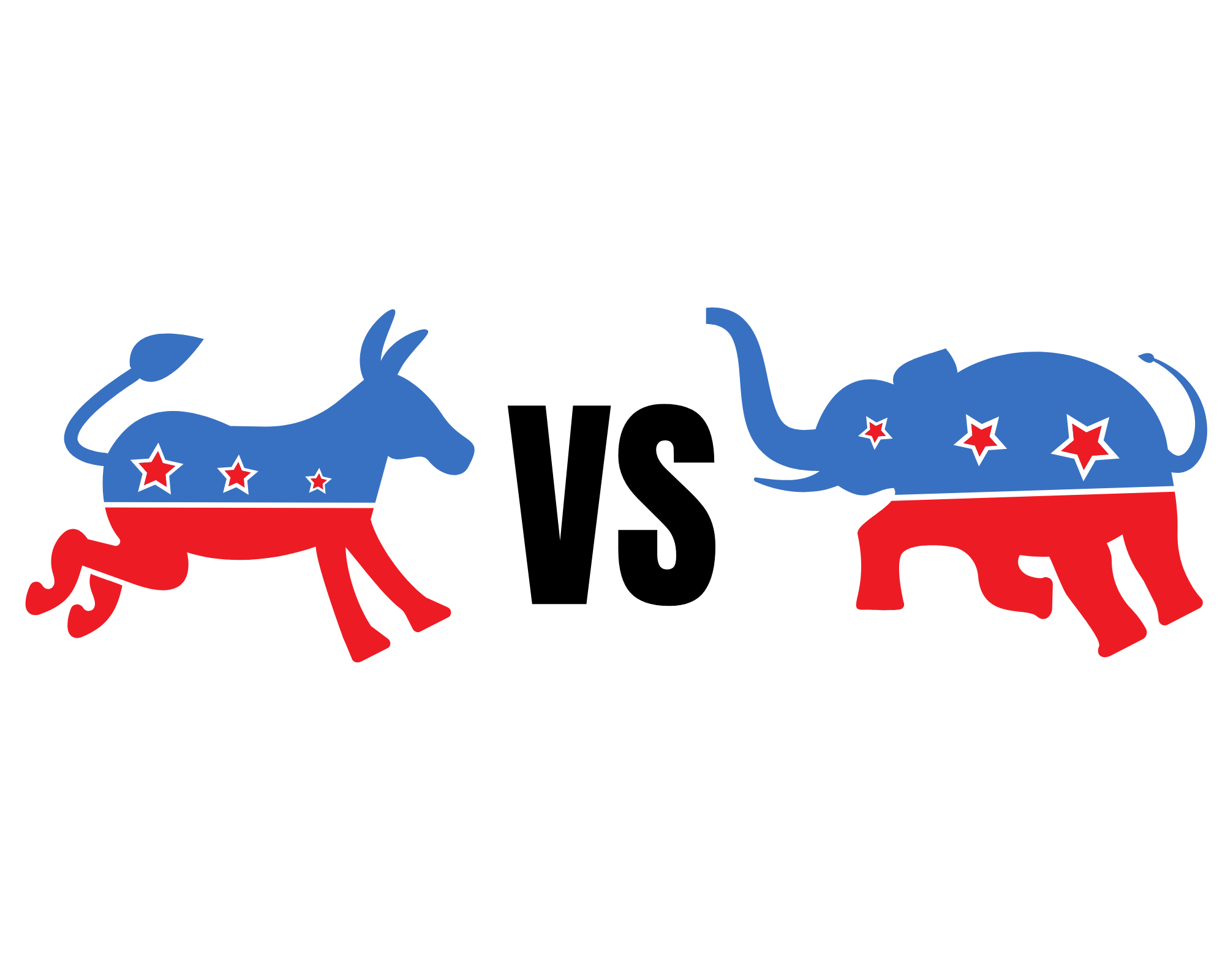

When asked to describe U.S. politics in one word, 79% of respondents to a 2023 Pew Research Study chose negative words such as “divisive” or “corrupt.”
This is symbolic of an overall shift in American political culture from just 40 years ago.
During the Republican presidency of Former President Ronald Reagan (1981-1989), the Democratic Speaker of the House, Thomas O’Neill Jr., would drive to the White House every night to sit and talk with Reagan over a drink, away from the media. Even though the two publicly had starkly different political stances, they were still able to set aside those differences and have a civilized conversation.
“While neither man embraced the other’s world view, each respected the other’s right to hold it,” O’Niell’s son, Thomas O’Neill III, wrote in The New York Times. “Each respected the other as a man.”
The Chatterbox recently sat down with Howard Wilkinson, a senior political analyst at WVXU, who has been covering American politics on local, state and national levels for 50 years.
Wilkinson has covered every Ohio governor’s race since 1974 and has interviewed several presidents, giving him firsthand experience with the shift in American political discourse over the past several decades.
He attributes the start of this shift to the election of Former President Barack Obama in 2008. He notes that it was amplified by President Trump’s rise in the Republican Party in 2016.
“After Obama was elected, some right-wing organizations [started] coming out, protesting and shouting down [on their opponents],” Wilkinson said. “Then, when Donald Trump arrived on the scene, it was magnified ten times over because he would literally base his campaign on [the idea that] if you oppose [him], you’re the enemy.”
Polls conducted by Gallup News show this shift in the tone of political discourse.
Former Democratic President Bill Clinton had a 39% approval rating among republicans when he left office in 2001.
However, when Former Democratic President Barack Obama left office in 2017, he had just a 15% approval rating among republicans. Similarly, when Republican President Trump left office in 2021, he had a 4% approval rating from democrats.
“Nothing’s wrong with opposition, that’s part of having a democracy,” Wilkinson said, “but when you make the other side into enemies, and it happens on both sides, that’s when you get into this problem.”
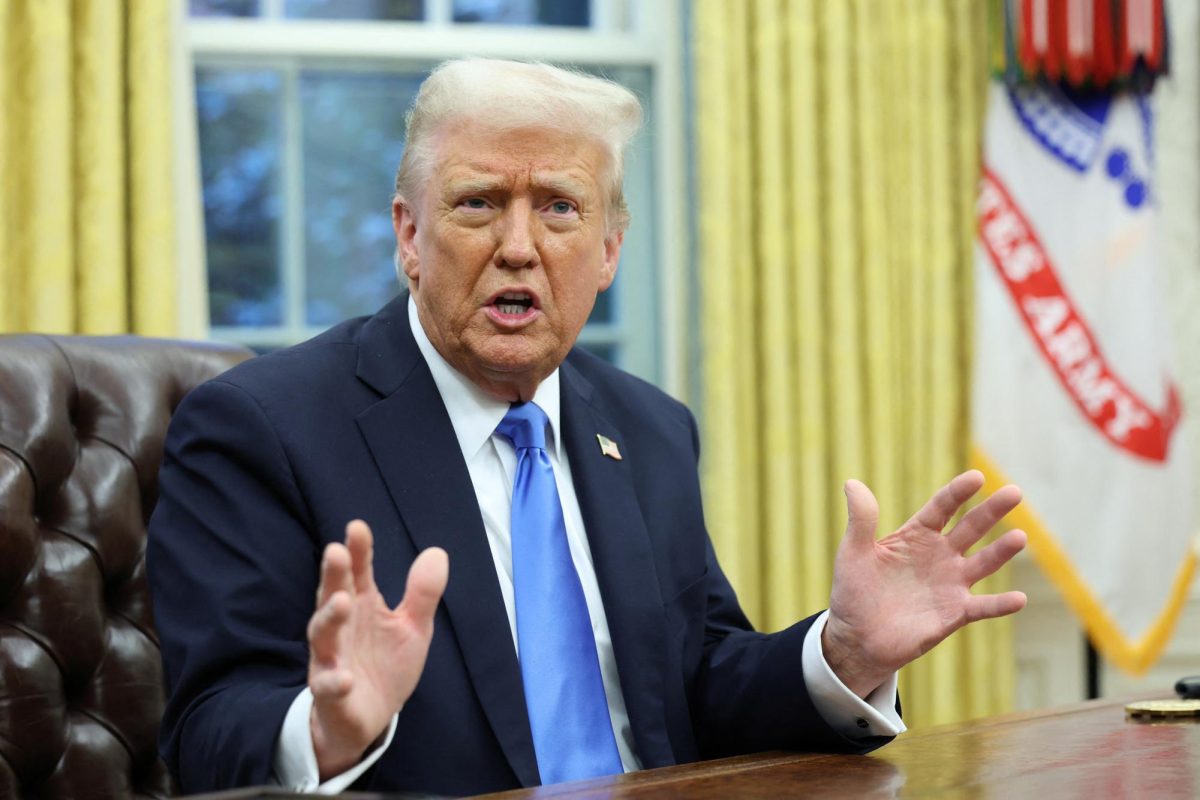
Following the assassination of right-wing political activist Charlie Kirk, President Trump spoke at his memorial service on Sept. 21, and told the crowd, “I hate my opponent, and I don’t want the best for them.”
President Trump’s remark reflects the significant change in the parties’ perspectives of each other in recent decades.
Earlier this month, text messages were uncovered that Democrat Jay Jones sent in 2022, joking about shooting the former Virginia House Speaker, Republican Todd Gilbert. Jones is currently running for state attorney general against the Republican incumbent, and his standing in this race may have been jeopardized by these messages; Republicans are calling for him to drop out of the race altogether.
This lack of communication between political parties in the U.S. has led to the dehumanization of those deemed to be the “opposition.”
“Politicians always argue with each other, that’s part of the deal,” Wilkinson said, “but it didn’t have the kind of mean-spirited stuff that we see today, where you’ve got two camps, they won’t talk to each other, they won’t compromise [and] they won’t get anything done.”
This limits the amount of bipartisan legislation that makes its way through Congress and causes legislative gridlock similar to the one surrounding the current funding bill that resulted in a government shutdown on Oct. 1.
Both parties have been blaming each other for the shutdown, and there have been limited attempts at finding a solution during the past couple of weeks.
“They could end this right now if they just stood up and said, ‘Mr. President, no, we’re not going down that road, let’s see if we can work things out,’” Wilkinson said. “‘Let’s, number one, quit blaming each other for the shutdown, talk and give a solution.’ If that happened, [there] would be a lot of progress being made for the future.”
This raises the question of how the U.S. will return to its founding democratic principles of collaboration with greater human decency in mind.
Wilkinson believes it’s mainly about political opponents getting back to talking to each other in a civilized manner.
“If I had one wish to come true, it’s that we somehow get past all of this meanness and spite and hate,” Wilkinson said, “and get back to those days where you could disagree, but you were civilized about it, and you treated your opponents like human beings, not like devils.”